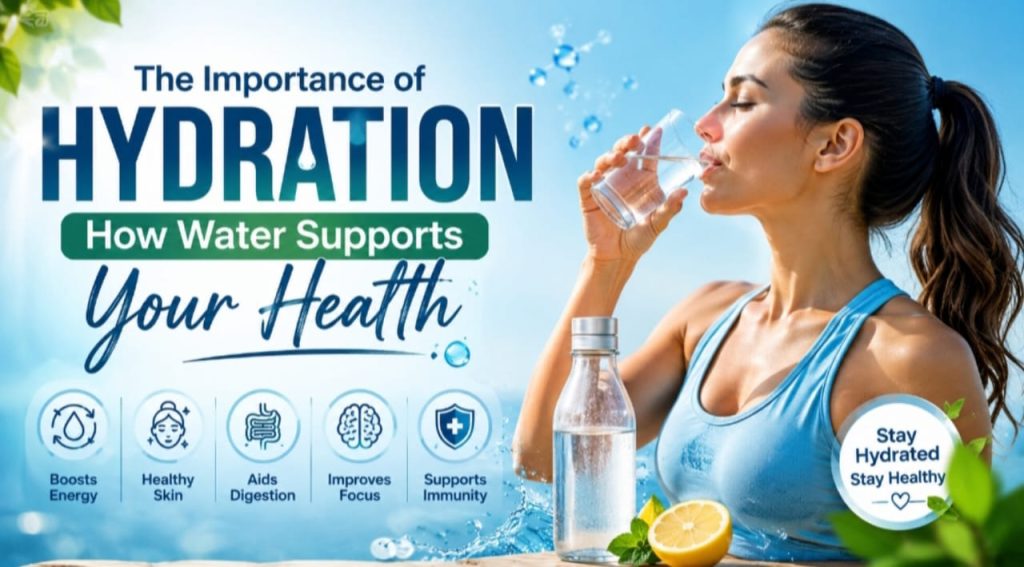


The importance of hydration becomes especially clear when we understand how much the body depends on water every day. Water is one of the simplest things our body needs every day, yet it is easy to forget to drink enough of it. We often focus on food, exercise, sleep and other healthy habits, while hydration gets less attention.
Understanding the importance of hydration can help you make water a regular part of your daily wellness routine. Getting enough water helps the body function normally and can help prevent dehydration.
Why Is Hydration Important?
Our body uses water for many everyday functions. It helps maintain normal body temperature, supports the removal of waste, and helps lubricate and cushion the joints. Water is also involved in digestion and many other processes that keep the body working properly.
When you do not get enough fluids, you may become dehydrated. Dehydration can affect how you feel and may contriibute to problems such as unclear thinking, mood changes, constipation and overheating.
This is why hydration for health should be part of your everyday routine, not something you think about only when you feel thirsty.
Benefits of Drinking Water
One of the biggest benefits of drinking water is that plain water provides hydration without calories. Choosing water instead of sugary drinks can also help reduce calorie intake. One of the key reasons to understand the importance of hydration is that water supports many basic fuctions of the body.
Water can support:
- Normal body temperature
- Healthy digestion
- Regular removal of waste
- Joint lubrication and cushioning
- Daily hydration needs
- Overall physical well-being
Remember that hydration does not come only from a glass of water. Foods with high water content, including many fruits and vegetables, can also contribute to your daily fluid intake. Learn more about foods that support better gut health naturally.
How Much Water Should You Drink?
There is no single amount of water that is perfect for everyone. Your fluid needs can vary depending on factors such as age, pregnancy status, activity level and breastfeeding. Your needs can also increase when you are physically active, in a hot environment, or experiencing fever, vomiting or diarrhea.
Instead of following one fixed number, pay attention to your body’s needs and make drinking fluids a regular habit throughout the day.
Simple Ways to Stay Hydrated For more information about healthy hydration and drinking water, see the CDC guide on water and healthier drinks.
Staying hydrated does not have to be difficult. A few small habits can make drinking water easier.
- Carry a water bottle: Keep a reusable bottle with you at work, college, while travelling or during exercise.
- Drink with meals: Make water a regular part of breakfast, lunch and dinner.
- Choose water more often: Replace sugary drinks with plain water when possible.
- Add natural flavor: If plain water feels boring, try adding lemon or lime for a refreshing taste.
- Keep water nearby: Having a bottle within reach can remind you to drink throughout the day.
Hydration and a Healthy Lifestyle
Good hydration works best when combined with other healthy habits such as balanced eating, regular physical activity and enough sleep. You do not need complicated drinks or expensive products to make hydration part of your wellness routine.
The goal is simple: drink water regularly and listen to your body’s needs.
Final Thoughts
The importance of hydration goes far beyond simply feeling less thirsty. Water supports many basic functions that help you body work normally every day. Making water a regular part of your routine is one of the easiest healthy habits you can build.
Start small. Keep a water bottle nearby, drink water with meals and choose water more often instead of sugary beverages. These simple steps can help make healthy hydration habits a natural part of your lifestyle.
Your wellness journey can begin with something as simple as a glass of water.
FAQ
1. Why is hydration important for health?
Hydration is important because water helps the body function normally, maintain temperature, remove waste and support joints and other everyday processes.
2. What are the benefits of drinking water?
Drinking water helps prevent dehydration and supports normal body temperature, joint lubrication, waste removal and overall body function.
3. Can food help with hydration?
Yes. Many fruits and vegetables contain a lot of water and can contribute to your overall fluid intake.
4. Should everyone drink the same amount of water?
No. Water needs vary from person to person depending on factors such as age, activity level, pregnancy and breastfeeding.
5. What is an easy way to drink more water?
Carry a reusable water bottle, drink water with meals and keep water nearby during the day.